Scaling a design system for 75 development teams and 50 designers

The Challenge
Cvent's web applications were built by dozens of independent teams, each solving similar problems differently. As the company prepared for major growth—and eventually a pandemic requiring rapid pivots—we needed a unified foundation that could scale.
As Principal Designer, I led the team that built Carina, our design system. Named after both the constellation and the keel of a boat, it set our course into the future.
💡 Carina is one of three design systems I’ve built. Reach out if you’d like to see more!
My Role
- Establish governance processes, DesignOps
- System design and architecture
- Continuous education
- Coordinate planning with product teams
The Team
- Me
- Product manager
- 2 Senior product designers
- 1 Visual designer
- 4 developers
- 11 ambassadors
Users
- ~500 Developers
- 50 Designers
- 30,000 Cvent users
Impact
- Critical for $100M+ virtual conference launch during COVID (built in 1 month using Carina)
- Adopted by 75+ development teams and 50 designers
- 100+ coded components
- Full platform migration from Sketch to Figma with quality intact
Alex Atienza | Principal Product Designer @New Relic

“From pattern creation, review, and design library implementation, Steve always made design a conversation. Always aware, balancing, and encouraging creative freedom in a project that naturally restricts it. “
Building the Foundation
Created comprehensive documentation
Each component required considerations for usability, responsiveness, accessibility, and localization. I created templates to ensure accurate and standard documentation across 40+ Confluence pages and an internal resource site.


Established governance processes
I worked with the team to define processes for contribution, enhancement requests, and component definition. We encouraged creative use and established clear paths for teams to contribute back.

Built for theming
Defined tokens for color, typography, and animations. The dev team built it so users could provide primary and secondary colors—or just point to their corporate website—and the palette would apply to their event site or branded Cvent UI.

Scaling Through People
The Ambassador Program
When we migrated from Sketch to Figma, I created a program where designers throughout Cvent could contribute to polishing components. At one point, I coordinated over 11 designers, plus copywriters and developers, dividing work on 90 components over 3 months. This made adoption, contribution, and appreciation for the system stronger.


Making Education Continuous
I created training videos, led design org presentations, held office hours, detailed releases in documentation and Slack. For new patterns, I reached out to the entire design organization to contribute ideas, running collaborative workshops to gather input.


Measuring Success
Following Carina's launch, I surveyed users to see how well we aligned with our design goals. Carina scored significantly higher than our previous "Visual Refresh" on multiple brand values—particularly on feeling modern and innovative while maintaining professionalism.

The COVID Test
In Spring 2020, when COVID hit, Cvent lost its revenue source overnight. Product Management decided to add a virtual conference option. Using Carina components, we launched in one month. Within one year, this product earned over $100M. The design system's maturity made this speed possible.
Key Patterns
I led design for our most commonly used patterns:
- Save patterns with clear feedback states
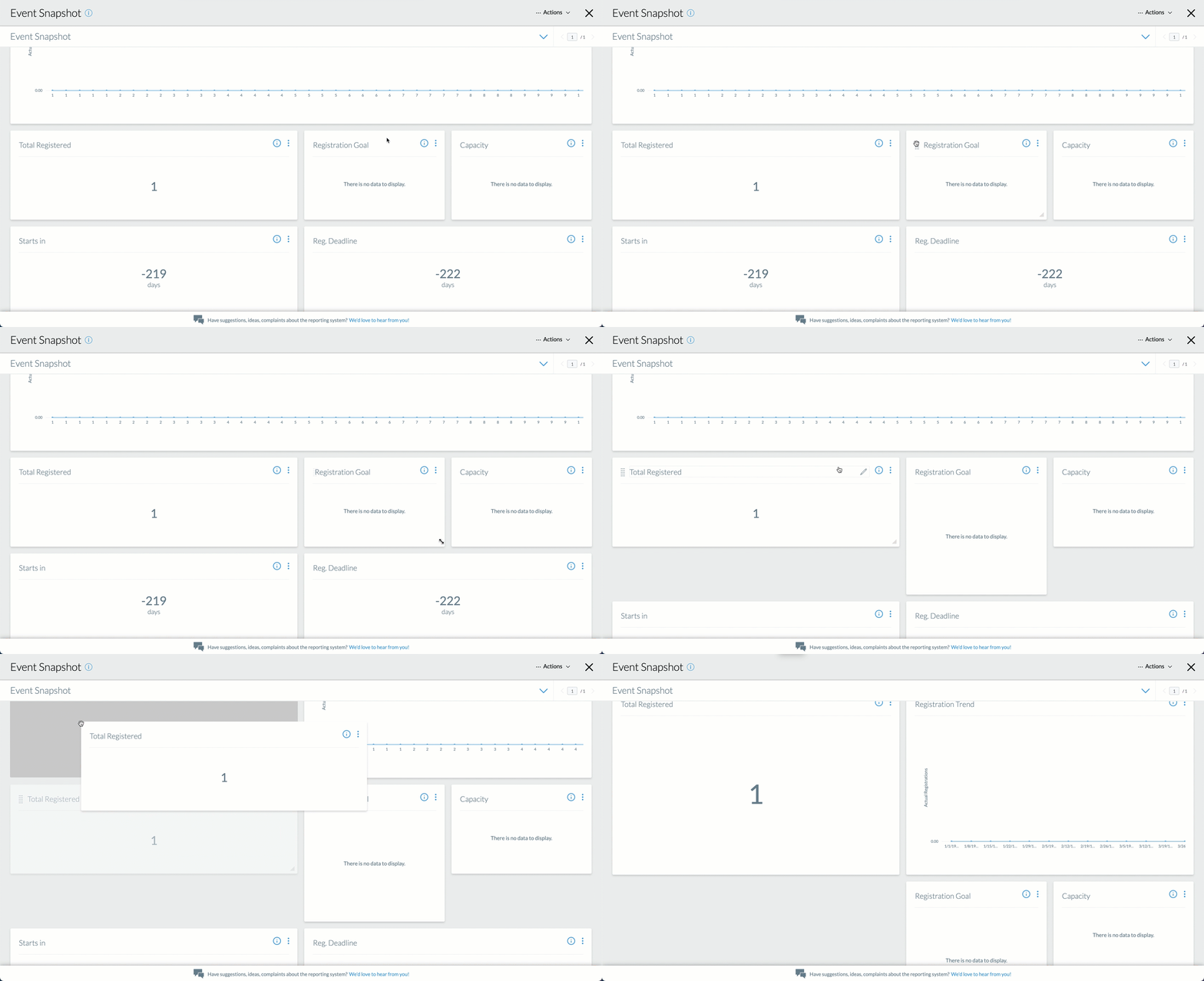
- Dashboard with drag-and-drop widget arrangement
- Search page with filtering and bulk actions
- Calendar view with responsive breakpoints
- Site and Email builder
Each component had light, dark, and low-fidelity wireframe versions. Each pattern included interactive states, flows, use cases, and dos and don'ts.


What I Learned
Scale through people, not just components
The Ambassador Program created ownership across the organization. When people contribute, they advocate.
Education is continuous, not a launch event
Training videos, office hours, Slack channels, workshops—multiple formats for different learning styles.
Document everything, even the obvious
What seems obvious to the creator is not obvious to the 75th team adopting the system.
Build for the crisis you don't see coming
We couldn't have launched virtual conferences in one month without the foundation we'd already built.