Expanding from Core Functionality to a Suite in Three Years

Summary
In 2023, the physical security industry hit a tipping point. Market mergers allowed competitors to offer "all-in-one" experiences that threatened Brivo's 20-year leadership. Resellers contacted us to complain they were losing deals. Google Analytics showed our rate of new reseller sign-ups had plateaued.
As design director, I led a three-year initiative to unify Brivo's fragmented suite, directing 8 designers and aligning executives around a "Single Pane of Glass" vision, through strategic planning, cross-functional coordination, and data-driven culture building, transforming Brivo from a collection of acquired tools into a competitive security platform.
Impact at a Glance
- +40% Increase in User Satisfaction
- +10 NPS Improvement
- 112% Engagement vs. Goal (Incident Management)
- -25% Overall User Complaints
- +95% Efficiency in VOC Analysis (via AI)
Organizational Impact:
- Built design processes that improved Product-Engineering communication
- Created shared vision enabling junior designers to contribute to high-impact deliverables
- Established data-driven culture with 95% time savings in Voice of Customer analysis
- Reduced tech stacks from 3 to 1 for web
Jeff Nielsen | CTO @Brivo

“Steve championed accessibility, inclusive design, and a culture of continuous learning. He constantly pushed for better ties and improved ways of working between Design, Product, and Engineering. We are a much better organization thanks to Steve’s passion.”
The Challenge
Brivo had advantages:
- Strong reseller channel
- Loyal customers (99% retention)
- Respected 20-year industry reputation
The issues:
Seamless was not a word you could use to describe the experience.
- 45% of feedback mentioned video integration friction ("clunky"). They were frustrated switching between multiple disconnected apps. For security professionals, seconds can mean the difference between life and death.
- Resellers were losing deals to larger companies offering all-in-one solutions.
- Users had to switch between three Brivo applications just to do their jobs:
- Brivo Access (React) - Primary access control management
- Smart Home (Angular) - Acquired 2020, property management for apartments
- Brivo Onair (jQuery) - Legacy configuration system requiring two dev teams just to keep it running
How I Led This
Established Annual Strategic Planning Rhythm
I led three annual vision exercises establishing themes for each upcoming year. Each involved leading senior designers to create their respective parts, then merging them for presentation to the executive team.
- Workshops with designers and PMs defining strategic themes
- Tie features to business goals
- Create prototypes with senior designers
- Present to executives for alignment and prioritization
- Break into user story maps
Following these exercises, Product Management determined MVPs, and designers executed features. I established regular review cadences—team meetings, critiques, and company-wide showcases every 6 weeks to maintain visibility and momentum.


Built Executive Buy-In Through Strategic Prototyping
Year 1: "Brivo Prime" & "Red Shirt"
I presented a roadmap to merge our Smart Home web app into Brivo Access and sunset the legacy system (Brivo Onair). Product Management was inspired by the approach, and also added merging the Smart Home mobile app with Brivo Mobile Pass. This would reduce our tech stacks from 3 to 1 for web and 2 to 1 for mobile, and leverage our design systems.

To demonstrate the potential, I directed the design team to create a high-fidelity prototype—"Red Shirt"—showing Engineering and PM leadership what seamless UX could accomplish.
The prototype demonstrated an admin tracking a suspect in a red shirt across camera feeds and access points, logging incidents without leaving the app.
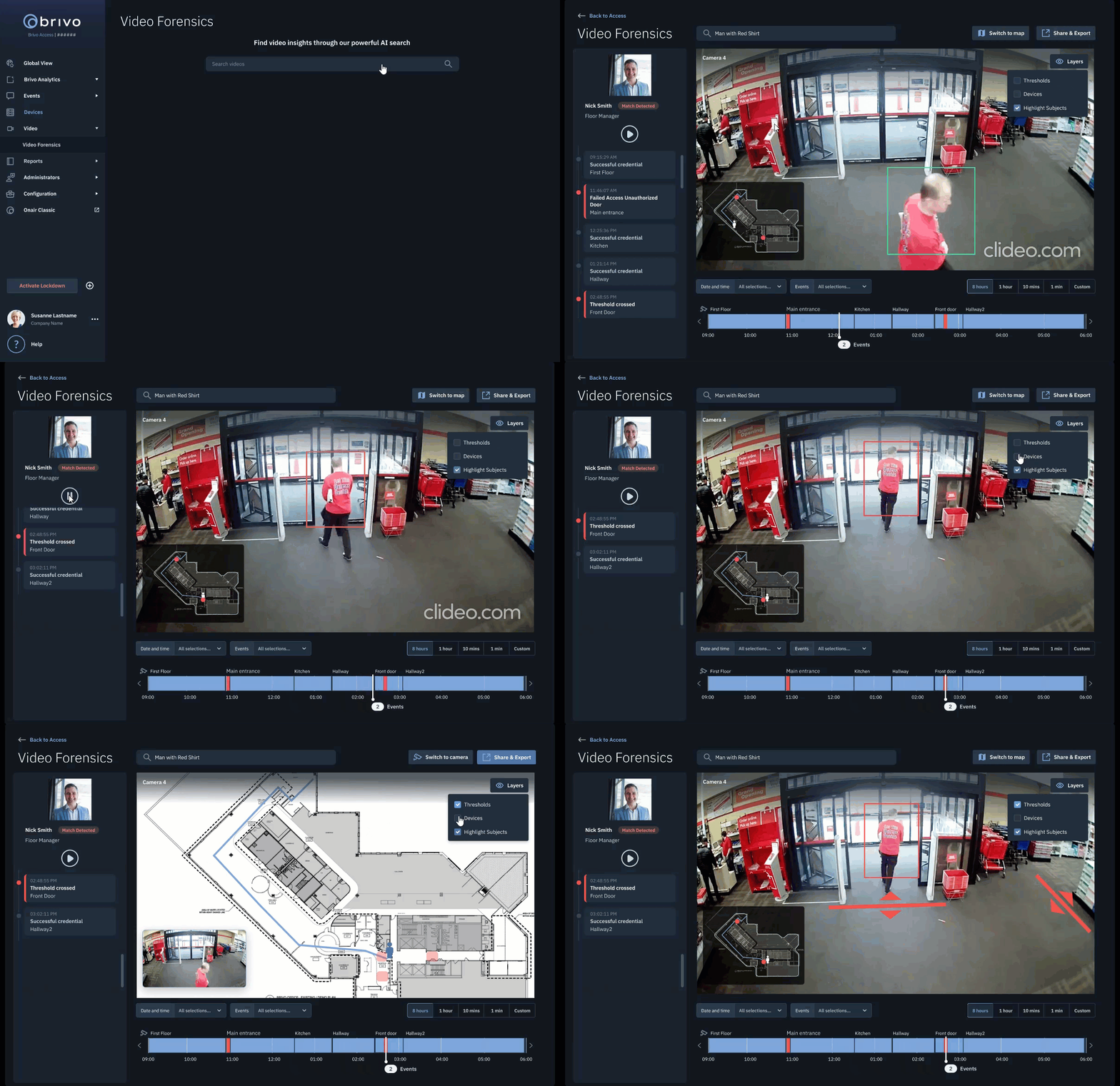
They were wowed. Some even believed it was real. This secured executive commitment.
Validated Strategy with User Research
I directed the design team to conduct "Most Important Thing" (MIT) research to determine what security admins most wanted from Brivo. This shaped our multi-year roadmap.
Key findings:
- Admins needed it to feel "all-in-one" and "single pane of glass"
- Competitive analysis showed opportunity to add incident management and intrusion monitoring
I also showcased storyboards at the annual reseller conference to validate priorities and build channel partner buy-in.

Built a Data-Driven Design Culture
Rather than relying on intuition, I established systematic data collection and democratized insights across the organization.
Research program
I guided the team to conduct ~34 user tests per year, choosing methods based on each project's needs (card sorting for IA, tree testing with 200+ users, usability testing, field visits, conference research).
Voice of Customer system
I established comprehensive VoC tracking across NPS scores, customer emails, in-app feedback (Hotjar, Userflow), app store reviews, and customer care data (Salesforce).
Democratizing insights
I created processes to share data widely.
- Monthly: Designers shared project stats (pre- and post-launch) in Slack to PMs and development.
- Quarterly/Annual: I shared summative AI analysis across all data sources with executive team.
- AI Tool: I created a shareable Gemini Gem for anyone to query the last month's data, reducing VOC analysis from days to minutes (95% time savings).
User Inputs & Research
I guided the team to conduct a wide range of research based on each project's needs. Over three years, we conducted ~34 user tests per year.
Methods:
- Card sorting (navigational mental models)
- Tree testing (200+ users)
- Usability testing
- Field visits and interviews
- Conference research (end user feedback)
User inputs:
- Field visits and user interviews
- Web analytics (Firebase, Datadog, Google Analytics)
- Sales engineering insights
- Voice of Customer (VoC) data
- NPS scores
- Emails from customers
- In-app feedback (Hotjar, Userflow)
- App store reviews
- Customer care data (Salesforce)
Internal feedback:
- Design showcases (every 6 weeks)
- 1:1 reviews with designers
- Design team critiques
- Kickoff meetings
- Periodic executive presentations

Year 2: Simplifying the Experience
- Navigation redesign (scalable IA)
- Responsiveness and accessibility (1,600 → 0 violations)
- Customized dashboards (SPOG)
- AI-powered search (natural language queries)
- Merging Smart Home into flagship


Year 3: Rounding Out the Offering
- Incident Management (unified response workflows)
- Intrusion system integration (alarm panels, sensors)
- Enhanced video integration (seamless playback)
- Remote monitoring service (24/7 partner integration) - Video


I was asked to twice to present release highlights on the company Youtube channel (2025 Video, 2024 video).

Leadership Lessons
- Prototypes speak louder than roadmaps: The "Red Shirt" prototype secured executive buy-in faster than any presentation deck could. Showing what's possible is more powerful than explaining it.
- Annual rhythm drives sustained momentum: Establishing yearly vision exercises created consistent opportunities to reassess direction, celebrate progress, and maintain organizational focus over a multi-year transformation.
- Democratize data to scale influence: Creating tools and processes for anyone to access insights (like the VoC Gemini Gem) multiplied the impact of research beyond the design team. Data-driven culture requires accessible data.
- Validate before executing: The MIT research revealed most desired functionality already existed—users needed better integration, not more features. This saved months of misdirected development effort.
- Build capabilities, not just products: Improving Product-Engineering communication and enabling junior designers to contribute to high-impact work created lasting organizational value beyond any single feature launch.